
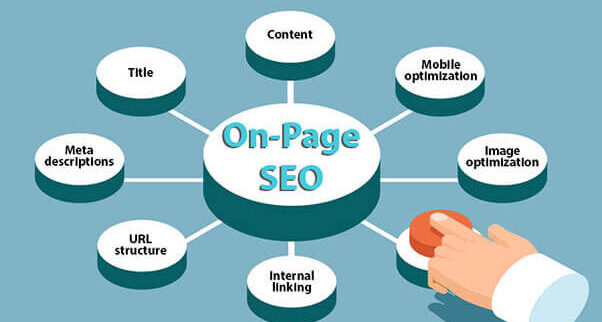
On-page SEO refers to all the optimization techniques that are applied directly on a website to improve its ranking on search engines. It is one of the most important parts of SEO because it helps search engines understand your content better and improves user experience.

What Is On-Page SEO?
On-page SEO includes optimizing content, headings, images, URLs, meta tags, and internal links. Everything that users see on your website and everything that search engines read falls under on-page SEO.
Importance of Quality Content
Content is the heart of on-page SEO. Search engines prefer content that is useful, informative, and easy to understand. Your content should solve a problem or answer a question. Using relevant keywords naturally inside the content helps search engines know what your page is about.
Role of Headings (H1, H2, H3)
Headings make content easy to read and scan. The H1 tag should include your main keyword, while H2 and H3 tags should be used for subtopics. Proper heading structure improves readability and SEO performance.
Meta Title and Meta Description
The meta title is the clickable headline shown on Google search results. It should be clear, keyword-focused, and engaging.
The meta description gives users a short summary of your page. A well-written meta description improves click-through rate, which indirectly helps SEO.
URL Structure and Internal Linking
SEO-friendly URLs are short, clean, and keyword-rich. Internal linking helps search engines crawl your website and keeps users engaged longer. It also distributes link authority across pages.
Image Optimization
Images should be compressed for fast loading speed. Always use ALT text to describe images, as this helps search engines understand them and improves accessibility.
Final Thoughts
On-page SEO is the foundation of successful search engine optimization. Without proper on-page SEO, off-page efforts like backlinks will not give full results. If you want better rankings, start by optimizing your website from the inside.